ATEX Industrial Vacuums Guide
Our comprehensive guide covers everything UK businesses need to know about ATEX-certified industrial vacuum cleaners.
Learn what ATEX certification means, how UK DSEAR regulations apply to your workplace, and why standard vacuums are dangerous in explosive atmospheres.
We explain zone classifications (Zone 20, 21, 22), how to read ATEX equipment markings, and the types of combustible dust that require specialist cleaning equipment.
Discover which industries need ATEX vacuums, from food manufacturing to pharmaceuticals, and how to choose the right specification for your facility.
Our guide includes guidance on buying, hiring, and leasing options from an approved Nilfisk supplier.
ATEX Guide Contents
Introduction
If you operate in any environment where combustible dust or flammable gases are present, the Industrial vacuum you use is not just a cleaning tool. It is a critical piece of safety equipment. Get it wrong, and you are not just risking an HSE enforcement notice. You are risking lives.
The United Kingdom sees approximately 50 dust explosion incidents every year. Many of these are preventable. A significant number involve cleaning equipment that was never designed for the environment it was being used in. Standard industrial vacuums can generate static discharge, overheat, or produce sparks that ignite explosive atmospheres. ATEX-certified vacuum cleaners are engineered specifically to eliminate these ignition sources.
At CFM North East, we have spent over 25 years supplying, servicing, and advising on industrial cleaning equipment from our base in Bedale, North Yorkshire. As an approved Nilfisk supplier, we provide the full range of ATEX-certified industrial vacuums, and we work with Health & Safety Managers, Facilities teams, and Operations teams across manufacturing, food processing, pharmaceuticals, woodworking, and chemical production to ensure they have the right equipment for their specific hazardous environment.
To go alongside our general industrial vacuum guide this guide is designed to give you a thorough, practical understanding of ATEX vacuum’s: what they are, why they matter, how to choose the right one, and where UK regulations sit. Whether you are looking to purchase, hire, or lease ATEX equipment, or simply need to understand your compliance obligations, this page covers it all.
Each section below provides a detailed summary. For those wanting more information, we have published dedicated articles on each topic, linked throughout this guide.
What Is ATEX?
ATEX takes its name from the French Atmosphères Explosibles, meaning explosive atmospheres. It refers to the European regulatory framework that governs equipment and workplaces where explosive atmospheres may occur.
The framework is built on two EU Directives:
ATEX Equipment Directive (2014/34/EU)
This directive sets out the essential health and safety requirements for equipment and protective systems intended for use in potentially explosive atmospheres. It covers the design, manufacture, testing, and certification of equipment. Any product carrying an ATEX marking has been assessed against these requirements by a notified body.
ATEX Workplace Directive (1999/92/EC)
This directive places obligations on employers to assess explosion risks, classify hazardous areas into zones, and ensure that appropriate equipment is used in each zone. It focuses on protecting workers rather than regulating equipment manufacturers.
Following Brexit, the UK adopted these directives into domestic law. Equipment placed on the market in Great Britain now requires UKCA marking rather than CE marking, though CE-marked equipment continues to be accepted under transitional arrangements. The practical requirements for ATEX-certified equipment remain substantively the same.
In simple terms: if a vacuum carries valid ATEX certification, it has been independently tested and certified as safe for use in a specified type of explosive atmosphere. If it does not carry that certification, it should not be used where combustible dust or flammable vapors are present.
UK DSEAR Regulations
In the UK, the regulations that translate the ATEX Workplace Directive into law are the Dangerous Substances and Explosive Atmospheres Regulations 2002, commonly known as DSEAR. These regulations are enforced by the Health and Safety Executive (HSE) and place clear duties on employers.
Under DSEAR, employers must:
Carry out a risk assessment identifying dangerous substances present in the workplace
Classify areas where explosive atmospheres may form into appropriate zones
Eliminate or reduce risks from dangerous substances as far as reasonably practicable
Ensure that equipment used in classified zones is appropriately rated for that zone
Provide employees with suitable information, training, and instruction
Prepare an explosion protection document
The consequences of non-compliance are severe. DSEAR breaches can result in unlimited fines, and where a failure leads to a fatality, directors and officers can face corporate manslaughter charges. The HSE takes a proactive approach to enforcement, and inspectors routinely check that cleaning equipment in classified zones carries appropriate ATEX certification.
It is also worth noting the EN 17348:2022 standard, which became a harmonised standard in March 2023. This standard specifically addresses industrial vacuum’s for use in potentially explosive atmospheres, providing detailed requirements for design, construction, and testing. Equipment manufactured to this standard represents the current benchmark for ATEX vacuum compliance.
For a detailed breakdown of DSEAR requirements and how they apply to your cleaning equipment, see our dedicated DSEAR compliance article.
ATEX Zone Classifications
Understanding zone classifications is fundamental to selecting the right ATEX vacuum. Explosive atmospheres are classified based on how frequently and for how long the hazardous atmosphere is likely to be present. The classification determines the minimum equipment category required.
Dust Zones
Dust zones apply in environments where combustible dust is present. These are the zones most commonly relevant to vacuum selection:
Gas Zones
For environments where flammable gases or vapours are the primary hazard, an equivalent classification applies:
A critical point to understand: higher category equipment can always be used in lower risk zones. A Category 1 vacuum certified for Zone 20 can safely be used in Zone 21 or Zone 22. However, a Category 3 vacuum rated for Zone 22 must never be used in Zone 21 or Zone 20. If in doubt, always specify the higher category.
For a comprehensive explanation of zone classifications and how to determine which zones apply in your facility, see our detailed ATEX zone classification guide.
For a full breakdown of L, M and H class requirements beyond ATEX, see our Industrial Vacuum Dust Classification Guide
Why Standard Vacuums Are Dangerous in Explosive Atmospheres
A standard industrial vacuum, even a high-quality commercial unit, is not designed for use in explosive atmospheres. Using one in a classified zone is not just a compliance failure. It is genuinely dangerous.
Standard vacuums can create ignition sources through several mechanisms: static charge build-up on plastic components and hoses, electrical arcing from motors and switches, sparking from metal objects striking internal surfaces, and overheating of motors or bearings. Any one of these can ignite a combustible dust cloud or flammable vapour.
ATEX-certified vacuums differ from standard units in several fundamental ways:
Antistatic construction
All components, including hoses, filters, and collection containers, are manufactured from conductive or static-dissipative materials that prevent electrostatic charge accumulation.
Continuous grounding
The entire vacuum system maintains a continuous earth path, ensuring any charge that does build up is safely dissipated rather than discharged as a spark.
Explosion-proof motors
Motors are either explosion-proof (flameproof enclosure), increased safety rated, or replaced entirely with pneumatic drive systems that eliminate electrical ignition sources altogether.
Stainless steel collection containers
Rather than plastic containers that build static charge, ATEX vacuums typically use stainless steel containers that are conductive, robust, and resistant to chemical attack.
Multi-stage filtration
ATEX units incorporate filtration systems designed to prevent fine dust from passing through the motor area or being exhausted back into the atmosphere, which could create or contribute to an explosive dust cloud.
Third-party certification
Every ATEX vacuum must be tested and certified by an independent notified body. This is not a self-declaration. The equipment undergoes rigorous testing to confirm it meets the essential health and safety requirements of the ATEX Directive.
The cost difference between a standard vacuum and an ATEX-certified unit is significant. But that cost reflects genuine engineering differences that could prevent a catastrophic incident. It is not a premium you are paying for a sticker.
Types of Combustible Dust
One of the most common misconceptions we encounter is that combustible dust only applies to obviously flammable materials. In reality, the range of materials that can form explosive dust clouds is far broader than most people expect. Almost any organic material, and many metals, can be explosive in finely divided form.
Food and Agricultural Dust
Flour, sugar, starch, grain dust, powdered milk, cocoa, spices, and animal feed. The food and beverage sector accounts for approximately 24% of all dust explosion incidents in the UK, making it the single highest-risk industry. Many food processing facilities handle multiple combustible dusts simultaneously.
Wood and Paper Dust
Sawdust, sanding dust, MDF dust, paper dust, and cardboard dust. Woodworking and furniture manufacturing create fine dust as a routine byproduct of machining, sanding, and cutting operations. MDF dust is particularly hazardous due to its very fine particle size.
Metal Dust
Aluminium, magnesium, titanium, iron, and zinc. Metal dusts are among the most explosive and difficult to manage. Aluminium dust in particular has caused some of the most devastating industrial explosions on record. Metal dust fires are also extremely difficult to extinguish.
Chemical and Pharmaceutical Dust
Active pharmaceutical ingredients, excipients, pigments, dyes, pesticides, and chemical intermediates. Pharmaceutical manufacturing often involves handling potent compounds in small quantities, but the explosion risk from dust remains significant, particularly during milling, blending, and tablet compression.
Plastics and Rubber Dust
Polyethylene, polypropylene, polystyrene, nylon, epoxy resin dust, and rubber crumb. Plastics processing operations such as grinding, pelletising, and moulding create fine dusts that are readily combustible.
Textile Fibres
Cotton, wool, linen, synthetic fibres, and textile flock. Textile manufacturing generates airborne fibres that can form explosive concentrations, particularly in carding, spinning, and weaving operations.
Coal and Carbon Dust
Coal dust, carbon black, activated carbon, charcoal, and graphite. These materials are combustible in fine form and are encountered in energy production, filtration manufacturing, and various industrial processes.
If you are unsure whether the materials in your facility constitute a combustible dust hazard, a DSEAR risk assessment is the place to start. We can advise on the types of ATEX equipment appropriate for your specific dust types. For more detail on combustible dust hazards and their properties, see our dedicated Complete guide to Combustible Dusts article.
Industries That Require ATEX Vacuum Cleaners
ATEX-certified vacuum cleaners are required across a wide range of industries. Some are obvious, others less so. If your operations generate combustible dust or involve flammable substances, you almost certainly need to consider ATEX-rated cleaning equipment.
Food and Beverage Manufacturing
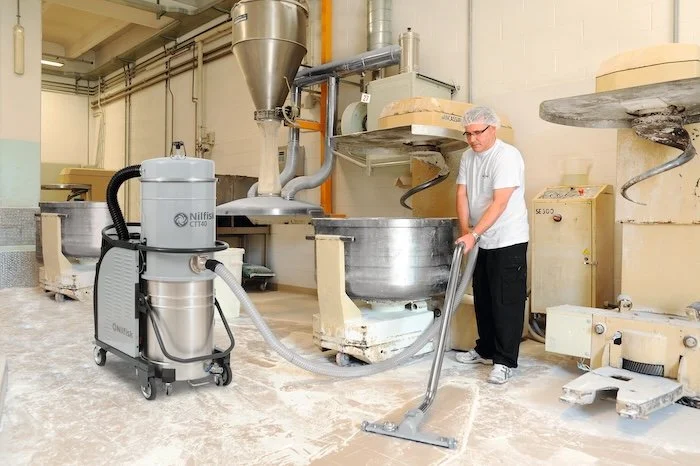
With 24% of UK dust explosions occurring in the food and beverage sector, this industry has the highest incidence of dust-related incidents. Bakeries, flour mills, sugar refineries, spice blending facilities, confectionery manufacturers, and animal feed producers all handle combustible dusts as part of their daily operations. The combination of fine organic dusts, warm environments, and mechanical processing equipment creates conditions where explosive atmospheres can form rapidly.
Pharmaceutical Manufacturing
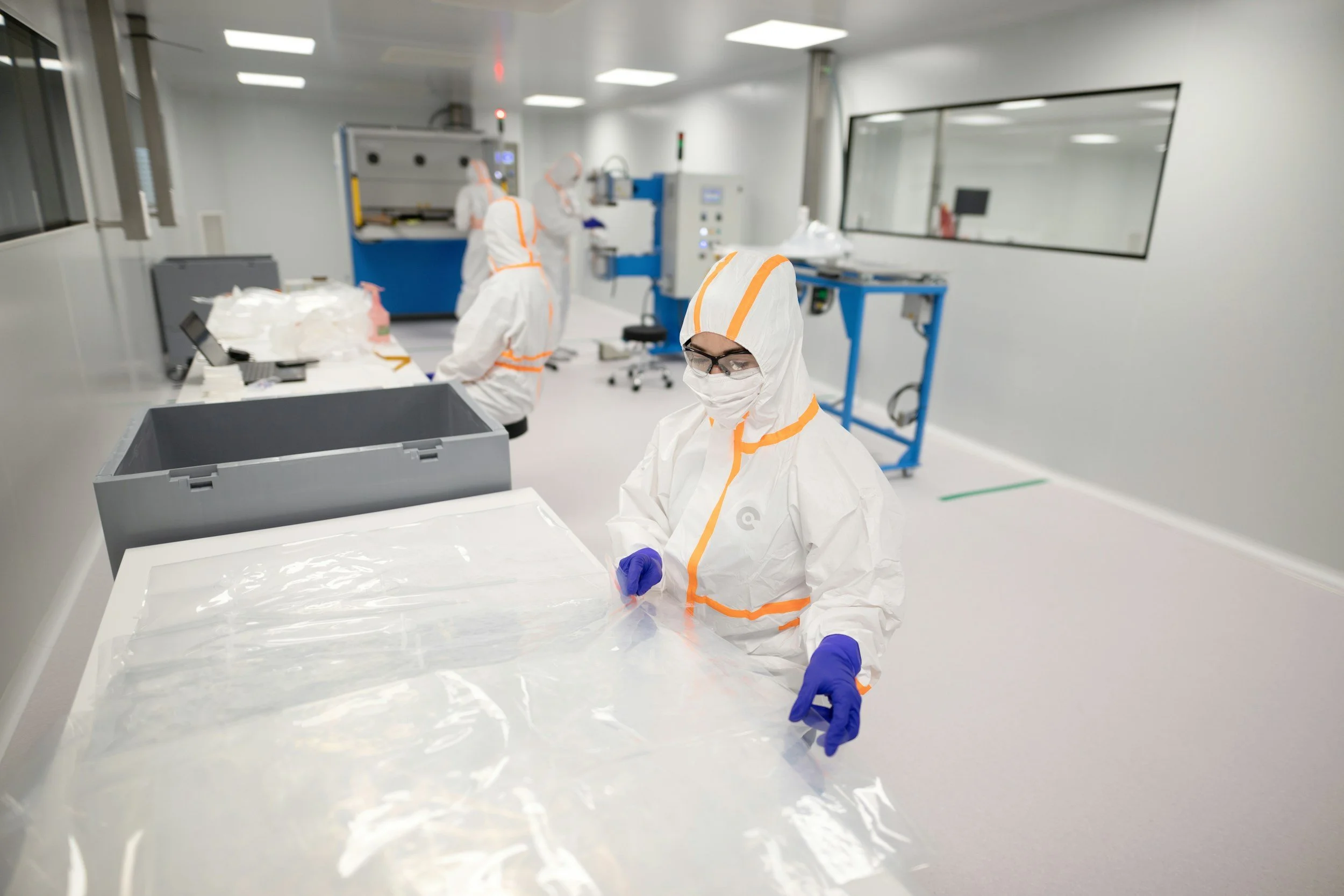
Drug manufacturing involves milling, blending, granulating, and compressing powders, many of which are combustible. Pharmaceutical facilities also face additional regulatory requirements around cross-contamination, meaning ATEX vacuums in this sector often need to meet GMP standards alongside explosion protection requirements.
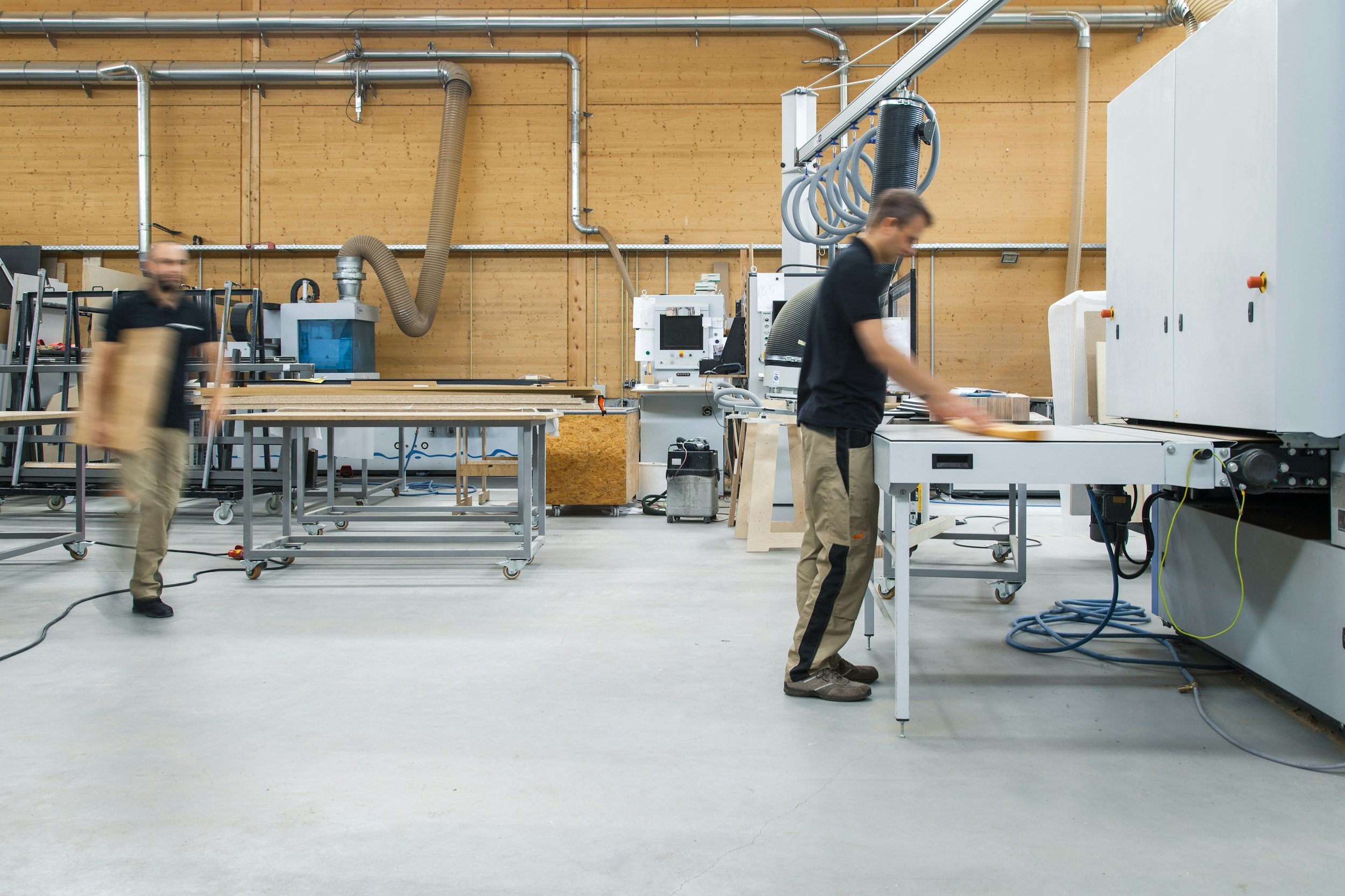
Woodworking and Furniture Manufacturing
Sawmills, joinery workshops, furniture factories, and MDF processing plants all generate significant volumes of combustible wood dust. The 2015 changes to UK workplace exposure limits for wood dust increased scrutiny on dust management in this sector.
Metal Fabrication and Machining
Grinding, polishing, cutting, and welding operations on metals such as aluminium, magnesium, and titanium generate fine metallic dusts that are highly explosive. 3D printing and additive manufacturing facilities handling metal powders are an increasingly significant category within this sector.
Chemical Processing
Chemical plants handling powdered raw materials, pigments, and intermediates frequently have multiple classified zones where ATEX equipment is mandatory. The diversity of substances handled means risk assessments need to consider the properties of each material individually.
Agriculture and Grain Handling
Grain silos, feed mills, and agricultural processing facilities handle large volumes of combustible organic dust. Grain dust explosions have historically been among the most devastating industrial incidents.
Plastics and Rubber Manufacturing
Compounding, grinding, and recycling operations in the plastics industry generate fine dust that meets the criteria for explosive atmospheres.
Textile Manufacturing
Cotton mills, synthetic fibre processing, and carpet manufacturing generate airborne fibres and dust throughout production processes.
Energy and Utilities
Biomass power stations, coal handling facilities, and waste-to-energy plants all deal with combustible materials that require ATEX-rated equipment for safe housekeeping.
This is not an exhaustive list. If you are uncertain whether your operations fall within the scope of DSEAR and ATEX requirements, a risk assessment will provide the definitive answer. See our sector-specific guides for detailed information on ATEX requirements in your industry:
ATEX vacuums for Food Manufacturing
How to Read ATEX Equipment Markings
Every ATEX-certified vacuum cleaner carries a ratings plate with a standardised marking that tells you exactly what environments it is certified for. Understanding these markings is essential for ensuring you are using the right equipment in the right zone.
A typical ATEX marking looks something like this:
Ex II 2D Ex h IIIB T125°C Db
Here is what each element means:
Ex
The explosion protection symbol, confirming the equipment is ATEX certified.
Equipment Group
Group I is for mining (firedamp). Group II is for all other industries. Industrial vacuum cleaners are virtually always Group II.
This is the most important element for zone selection. Category 1 provides the highest level of protection (suitable for Zone 20/0). Category 2 is suitable for Zone 21/1. Category 3 is suitable for Zone 22/2.
Environment
'D' indicates the certification is for dust environments. 'G' indicates gas environments. Some equipment carries both D and G certifications.
Gas Groups and Dust Types
For gas: IIA (propane), IIB (ethylene), IIC (hydrogen, highest risk). For dust: IIIA (combustible flyings), IIIB (non-conductive dust), IIIC (conductive dust, highest risk).
Classification
This indicates the maximum surface temperature of the equipment. It must be lower than the ignition temperature of the dust or gas present in your environment. For dust, this is expressed as a specific temperature (e.g., T125°C). For gas, it uses classes T1 (450°C) through T6 (85°C).
Equipment Protection Level (EPL)
Da, Db, or Dc for dust (corresponding to Categories 1, 2, and 3 respectively). Ga, Gb, or Gc for gas.
When comparing ATEX vacuums, always check that the marking on the equipment matches or exceeds the requirements of your zone classification and the properties of the materials you are handling. If you are unsure how to interpret the markings on a particular unit, we are always happy to walk you through it.
For a more detailed explanation of ATEX markings with visual examples, see our dedicated article on how to read ATEX ratings plates.
How to Choose the Right ATEX Vacuum Cleaner
Selecting the correct ATEX vacuum is not simply a matter of picking one off the shelf. Several factors need to be considered, and getting the specification wrong can leave you either non-compliant or paying significantly more than necessary for capabilities you do not need.
Not all hazardous dust requires ATEX certification, our Complete Industrial Vacuum Guide covers the full range of equipment for every application
Start with Your DSEAR Assessment
Your DSEAR risk assessment is the starting point. This document should identify the hazardous zones in your facility, the types of combustible materials present, and the ignition risk they pose. Without this assessment, you are guessing at the equipment specification you need. Under DSEAR, the assessment is not optional – it is a legal requirement.
Consider the Material Type
The combustible dust or gas in your environment determines the dust group (IIIA, IIIB, or IIIC) and the maximum permissible surface temperature. Conductive dusts such as metal powders require Category IIIC equipment. Non-conductive organic dusts typically fall under IIIB. Getting this classification right is essential.
Power Source
ATEX vacuum cleaners are available in three main power configurations:
Electric (single-phase or three-phase)
Single-phase units are generally smaller and suited to lighter-duty Zone 22 applications. Three-phase models provide more power for continuous industrial use and are available for Zone 21 and Zone 22.
Pneumatic (compressed air)
Pneumatic vacuums eliminate electrical components entirely, making them suitable for the most hazardous environments including Zone 20 and Zone 21. They require a compressed air supply, which most industrial facilities already have.
Battery-powered
Battery ATEX vacuums offer portability without trailing cables. They are available for Zone 21 and Zone 22 applications and are useful in facilities where mains power is not readily available at the point of use.
Volume and Capacity
Consider both the volume of material you need to collect and the frequency of use. A small workshop generating modest amounts of dust may be well served by a compact unit. A food manufacturing line producing large volumes of powder spillage throughout a shift will need a larger capacity machine with faster recovery times.
Mobility Requirements
Will the vacuum be used in a single location or moved around a facility? Wheeled mobile units are the most common, but wall-mounted or centralised systems may be more appropriate for fixed applications. For very large facilities, centralised vacuum systems with multiple inlet points can be the most efficient solution.
Filtration Requirements
The filtration specification needs to match the material being collected. Fine pharmaceutical powders require higher efficiency filtration than coarse wood chips. Some applications require HEPA-level filtration, which is available on certain ATEX models. Wet-and-dry collection capability is also available for applications where liquids are present alongside combustible dusts.
We walk every customer through this selection process. It is one of the areas where our experience adds the most value, because getting the specification right the first time saves money and avoids compliance headaches down the line, see our ATEX vacuum buying guide to find out more
CFM’s ATEX Vacuum Range: Nilfisk Approved
As an approved Nilfisk supplier, CFM North East provides the full range of Nilfisk ATEX-certified industrial vacuum cleaners. Nilfisk is one of the world’s leading manufacturers of industrial cleaning equipment, and their ATEX range is among the most comprehensive available. Every unit we supply comes with full ATEX certification documentation and is covered by our service and support capabilities.
Zone 22 Single-Phase Electric
Compact, portable units designed for lighter-duty applications in Zone 22 classified areas. These are ideal for workshops, small production areas, and maintenance tasks where combustible dust is present but not in continuous concentrations. Single-phase power means they plug into standard industrial sockets without requiring specialist electrical installation.
Zone 21/22 Three-Phase Electric
The workhorse of industrial ATEX vacuum cleaning. Three-phase electric models deliver substantially more suction power and airflow than single-phase units, making them suitable for continuous industrial use. Available in Category 2 (Zone 21/22) configurations, these units handle heavier dust loads and larger collection volumes. They are the most common choice for manufacturing facilities with regular dust generation.
Mini Industrial ATEX Vacuums
For applications where space is limited or portability is paramount, the mini industrial range provides ATEX certification in a compact format. These units are well suited to laboratory environments, small batch processing areas, and maintenance operations where a full-sized industrial vacuum would be impractical.
Pneumatic ATEX Vacuums
Pneumatic models operate entirely on compressed air, with no electrical components whatsoever. This makes them the safest option for the most hazardous environments, including Zone 20 applications where explosive atmospheres are present continuously. They are widely used in chemical processing, pharmaceutical manufacturing, and any application where eliminating electrical ignition sources entirely is the preferred approach.
Centralised Vacuum Systems
For large facilities with multiple dust generation points, a centralised ATEX vacuum system can be the most efficient and cost-effective solution. These permanently installed systems feature a central power unit with piped vacuum points throughout the facility. Operators simply connect a hose at the nearest inlet point. Centralised systems reduce equipment costs per collection point and ensure consistent ATEX compliance across the entire site.
We carry stock of the most popular models and can supply any unit in the Nilfisk ATEX range to order. Every unit is commissioned, tested, and delivered with full documentation. For details of specific models, specifications, and current pricing, see our ATEX vacuum cleaner machines or contact us directly.
Buy or Lease: Flexible Acquisition Options
Not every business wants to purchase equipment outright, and not every situation calls for a permanent investment. CFM North East offers three ways to acquire ATEX vacuum cleaners, each suited to different circumstances.
Outright Purchase
Buying an ATEX vacuum gives you a capital asset with no ongoing finance commitments. For businesses with the budget available and a long-term need for the equipment, purchase is typically the lowest total cost option over the life of the machine. We provide full warranty coverage and can include service agreements to keep the equipment in certified condition.
Leasing
Leasing spreads the cost of ATEX equipment over a fixed term, typically 3 to 5 years, with predictable monthly payments. For many businesses, leasing offers significant advantages: it preserves capital for core operations, the payments are typically treated as an operating expense rather than capital expenditure (offering potential tax advantages – your accountant can advise on specifics), and it makes budgeting straightforward. At the end of the lease term, you can return the equipment, upgrade, or purchase it at a residual value.
We advise on the most appropriate acquisition method based on your specific situation. There is no pressure to buy when leasing would serve you better, and vice versa. The goal is to get you compliant with the right equipment in the most practical way. You can learn more about buying vs leasing ATEX vacuums for your business here.
Learn more about your acquisition options in our guide to buying, hiring, leasing and contract hire.
Frequently Asked Questions
Do I need an ATEX vacuum if my facility is not formally classified as a hazardous zone?
Potentially, yes. If your operations produce combustible dust in any quantity, you have a legal obligation under DSEAR to assess the risk. Many facilities that have not yet carried out a formal DSEAR assessment discover that they do in fact have areas that should be classified. The absence of a formal classification does not mean the risk does not exist. It means it has not been properly assessed.
What is the difference between Zone 21 and Zone 22 vacuum cleaners?
Zone 21 vacuums are certified to Category 2 and provide a higher level of protection than Zone 22 (Category 3) units. Zone 21 equipment is designed for areas where explosive dust atmospheres are likely to occur occasionally during normal operation, while Zone 22 covers areas where such atmospheres are not likely but may occur briefly. Zone 21 vacuums use more robust explosion protection measures and are correspondingly more expensive. If your DSEAR assessment classifies an area as Zone 21, you must use at least a Category 2 vacuum in that area.
Can I retrofit a standard vacuum to make it ATEX compliant?
No. ATEX compliance is an integral part of the design and manufacture of the equipment. It is not something that can be added after the fact. Retrofitting antistatic hoses or grounding cables to a standard vacuum does not make it ATEX compliant, and using a modified standard vacuum in a classified zone would be a serious breach of DSEAR. The equipment must be certified as a complete unit by a notified body.
How often should ATEX vacuum cleaners be serviced?
As a general guideline, ATEX vacuum cleaners should be inspected and serviced at least annually by a competent person, with more frequent checks for heavily used equipment. Filters, seals, grounding continuity, and hose integrity all need regular inspection. Your DSEAR risk assessment should specify the maintenance regime appropriate for your equipment and operating conditions. We offer service agreements that ensure your ATEX equipment remains in certified condition.
What certification documents should come with an ATEX vacuum?
Every ATEX vacuum should be supplied with an EU/UK Declaration of Conformity, the ATEX certificate issued by the notified body, and comprehensive operating and maintenance instructions that include the ATEX-specific requirements. Retain all of these documents. You may need to produce them during an HSE inspection or audit.
Can ATEX vacuums collect both wet and dry materials?
Some ATEX vacuum models are designed for wet-and-dry collection, but not all. If your application involves collecting liquids alongside combustible dusts, you need a unit specifically rated for wet-and-dry operation. Using a dry-only ATEX vacuum to collect liquids can damage the filtration system and compromise the explosion protection. Always confirm the intended collection materials when specifying equipment.
What is EN 17348:2022 and why does it matter?
EN 17348:2022 is the European standard specifically for industrial vacuum cleaners intended for use in potentially explosive atmospheres. It became a harmonised standard in March 2023, meaning compliance with it provides a presumption of conformity with the essential requirements of the ATEX Directive. Equipment manufactured to EN 17348:2022 represents the current best practice. When purchasing new ATEX vacuum equipment, look for conformity with this standard as an indicator of up-to-date design and testing.
Is a DSEAR assessment mandatory before purchasing ATEX equipment?
Strictly speaking, the DSEAR assessment is not a prerequisite for purchasing the equipment, but it is a legal requirement for any workplace where dangerous substances are present. In practical terms, you need the assessment to determine what specification of ATEX equipment is required. Purchasing equipment without an assessment is like buying safety equipment without knowing what the hazard is. You might get it right by luck, but you might also end up with equipment that is either insufficient for the actual risk or significantly over-specified for your needs.
Get Expert Advice on ATEX Vacuum Cleaners
Choosing the right ATEX vacuum cleaner is a compliance decision as much as it is a purchasing decision. The stakes – both in terms of safety and regulatory liability – are too high to get it wrong.
At CFM North East, we combine over 25 years of industrial cleaning equipment experience with our position as an approved Nilfisk supplier to provide expert, independent guidance on ATEX vacuum selection. We are not just selling equipment. We are helping you achieve compliance and keep your people safe.
Here is how we can help:
Free ATEX Assessment Consultation
Talk to us about your facility, your materials, and your current equipment. We will help you understand what you need and why.
View Our ATEX Vacuum Range
Browse the full range of Nilfisk ATEX-certified industrial vacuum cleaners here , with specifications and pricing.
Flexible Acquisition
Whether you want to buy or lease, we will find the arrangement that works for your business.
Ongoing Service and Support
Keep your ATEX equipment in certified condition with our maintenance and servicing capabilities.
Useful ATEX Equipment articles